

OmniIndex Blog:
Native Agents & Governable Control Vs Black-Box Wrappers
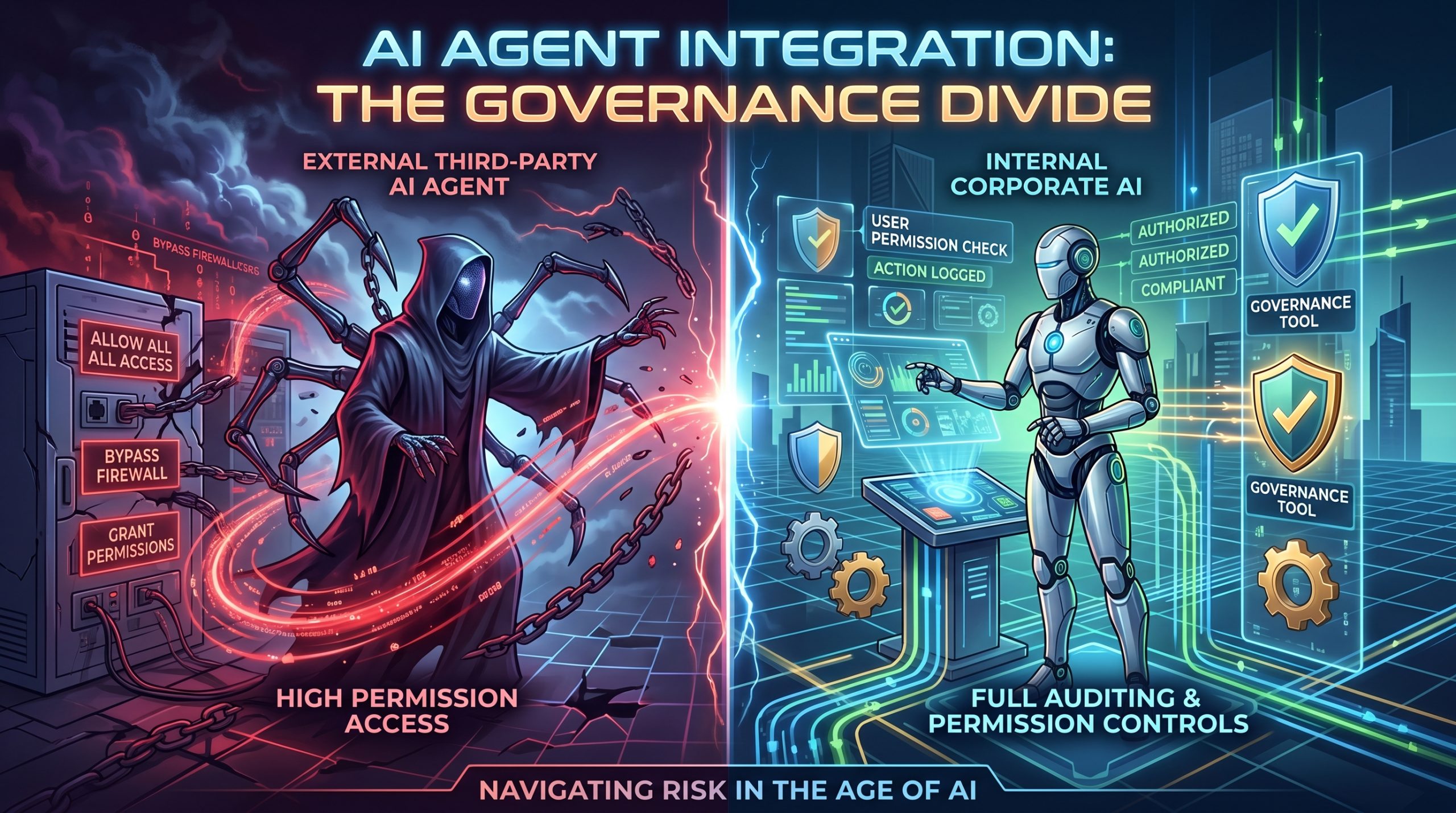
Enterprise AI is facing a quiet crisis.
Many organizations deployed initial AI tools expecting seamless automated workflows, only to realize the hard way: chatbots don't inherently connect to legacy data silos. To bridge this gap, the industry has aggressively turned to AI Agents. But while many of these tools deliver flashy results and claim "on-premise deployment," a dangerous reality remains.
Underneath the hood, nearly all of them are just wrappers to the same tools that have already failed corporate users.
While often beautifully designed and slick, they are tethered to the same external black-box models: trapped in a cycle of superficial governance, hidden data exposure, and unpredictable results. This latest post looks at how native agents that do exactly what you tell them to do and are grounded in domain-specific intelligence governed within your single AI workflow and models can do the same job, without the noise and risk.
The Problem with third-party Agents – Even when on-prem!
Many organizations think that shifting from a public cloud API to an on-premise model deployment solves their AI risks. It doesn't.
Whether your agent is hitting a third-party cloud API or a local open-weights model (like Gemma) running on your own servers, if it functions as a "wrapper," you are still exposed to critical operational bottlenecks:
- Opaque, Black-Box Reasoning: Just because a model runs on your local hardware doesn't mean you control it. Standard models still operate as black boxes. You cannot audit their reasoning paths, control their hallucinations, or guarantee compliance with strict enterprise guardrails.
- Zero System Context: Traditional wrappers are inherently blind to your enterprise ecosystem. They cannot communicate directly with your internal legacy databases or CRM software. This forces employees right back into the friction of manual data copy-pasting with you having to integrate these tools deep into your system with open permissions to get them the context they demand in order to work. Often without the ability to audit or govern them.
- Superficial, Fake Governance: You are trapped by the pre-configured boundaries of the base model. Because the wrapper sits around the model rather than integrating directly into your workflow, you cannot enforce granular, role-based data access or custom corporate safety filters.
- The Scaling Reality Check: While local deployments can stabilize per-token API costs, traditional wrappers require massive, unpredictable hardware overhead to run general-purpose models efficiently. Without an architecture designed for localized workflow optimization, your scaling budget remains entirely unpredictable.
Enter the Sovereign Approach:
Instead of wrapping external models, a sovereign architecture integrates native AI agents directly into your local ecosystem. Using a platform like Boudica Torc, companies are shifting from fragile API connections to deep, localized integration with these agents not add-ons or third-party integrations, but native and controlled with the internal governance and auditing of the tool they are working within.
1. Full Data Sovereignty
When agents run locally on your infrastructure, your data stays yours. This unlocks:
- Direct Database Access: Agents query internal sales or support databases directly using secure SQL templates: no third parties involved.
- Local File Access: Seamless reading from SharePoint, Google Drive, or local file systems.
- Zero Leakage: Compliance is guaranteed because information never leaves your network perimeter.
2. Multi-Step Intelligence
Most wrappers are single-turn interfaces (you ask a question, it gives an answer). Sovereign agents handle complex, multi-step workflows autonomously. For example, a single prompt can trigger an agent to:
- Query a sales database for recent orders.
- Cross-reference that data to fetch customer CRM records.
- Synthesize both sources into a beautifully formatted briefing document.
This is sequential processing that enables the sophisticated reasoning businesses actually need.
3. User-Managed Customization
Sovereign AI puts the power back in the hands of your IT administrators via dedicated Admin Portals. Teams can build custom prompt templates, connect agents to specialized tools like Salesforce, Slack, or Outlook, & configure natural language triggers with granular, on/off controls.
4. Cost Predictability
By utilizing localized models (like boudica or specialized reasoning models), organizations can finally predict their AI spend based on hardware infrastructure rather than fluctuating, volatile per-token API fees.
The Bottom Line
If your enterprise needs more than just a glorified chat interface, the choice is clear. To interact with your proprietary data and processes securely, you cannot rely on an external wrapper.
The future of enterprise AI belongs to sovereign agents that are built into your infrastructure, not wrapped around it or bolted on as external liabilities with the permissions & freedoms of an internal worker.
Written by Matthew Bain, OmniIndex Head of Marketing.
All rights reserved © 2026 OmniIndex